Arrested for DWI Over Thanksgiving Weekend in New Jersey? What Happens Next?
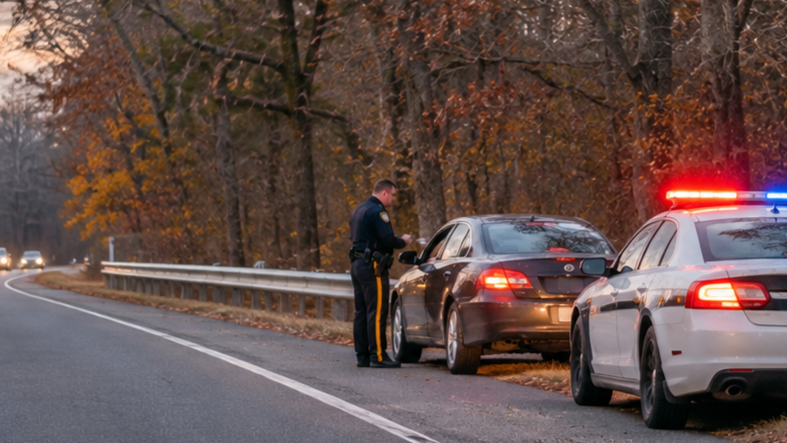
You were driving home from Thanksgiving dinner, meeting friends over the holiday weekend, or heading back after a night out when police pulled you over.
The officer asked whether you had been drinking. You were asked to step out of the car, perform roadside tests, or provide a breath sample. Before you knew it, you were being taken to the police station on suspicion of driving while intoxicated (DWI).
Now you have paperwork from the arrest, questions about your driver’s license, and possibly a court date approaching. You may also be wondering how this will affect your ability to get to work once the holiday weekend is over.
If you were arrested for DWI in New Jersey over Thanksgiving weekend, understanding what happens after the arrest is important. A DWI charge can carry significant consequences, but an arrest is not a conviction.
What happens next depends on the charge, the evidence police collected, and how the case proceeds through the municipal court.
What Happens After a DWI Arrest in New Jersey?
After a DWI arrest, police generally take you to the station for processing. This can include breath testing, recording information about the arrest, and issuing summonses for the alleged violations.
Depending on the circumstances, police may arrange for a responsible adult to take you home after processing. Other circumstances may affect when and how you are released.
Before leaving, you should receive paperwork identifying the charges and providing information about your required court appearance.
Review that paperwork carefully.
A DWI arrest under N.J.S.A. 39:4-50 generally proceeds as a motor vehicle offense in New Jersey’s municipal courts. Although DWI is not ordinarily classified as an indictable crime, a conviction can still result in substantial penalties.
The paperwork may also identify additional violations, including a separate summons if police allege that you refused a required breath test.
Can You Drive After Being Released From a DWI Arrest?
One of your first concerns may be whether you can legally drive to work, pick up your children, or handle your usual responsibilities.
A DWI arrest does not automatically mean your driving privileges have been suspended. New Jersey generally imposes DWI-related license forfeiture and ignition interlock requirements through the applicable legal process.
Your ability to drive depends on whether your license remains valid and whether any separate restriction or suspension applies.
Do not assume that being released from police custody means you are cleared to drive. Likewise, do not assume that your license is suspended simply because you received a DWI summons.
Check your license status and any instructions or restrictions on your paperwork before driving.
If you are convicted, the consequences for your driving privileges will depend on factors such as your blood alcohol concentration (BAC), prior offenses, and the statutory requirements that apply to your case.
What Happens at Your First DWI Court Appearance?
Your summons should identify the municipal court handling the matter and provide information about when you are required to appear.
At an initial appearance, the court can address whether you have an attorney, explain the charges and next steps, and schedule further proceedings. New Jersey generally schedules initial municipal court appearances virtually, while later DWI proceedings usually take place in person. You generally will not have to present your entire defense at that first appearance, and the case does not necessarily end that day.
New Jersey DWI cases generally proceed in municipal court, where a judge determines the outcome rather than a jury.
If you were arrested while visiting family or friends in Gloucester County or spending the holiday weekend near the shore in Atlantic, Cape May, or Ocean County, your case may be handled by a municipal court far from home.
That can create additional concerns if you live in another part of New Jersey or out of state, particularly when an in-person court appearance is required.
Do not disregard a court date because the holiday weekend is over or because you have returned home. If you cannot attend as scheduled, address the issue through the court or your attorney rather than simply failing to appear.
What if You Refused a Breath Test During the Arrest?
A refusal allegation creates a separate legal issue from the underlying DWI charge.
New Jersey’s implied-consent law requires drivers to submit to a qualifying breath test when the applicable legal requirements are satisfied.
Under N.J.S.A. 39:4-50.4a, refusing a required breath test can result in separate penalties, including fines, driving-privilege restrictions, and ignition interlock requirements.
A refusal summons does not automatically establish that a violation occurred.
The court must consider whether the legal requirements for the refusal charge have been established, including the circumstances surrounding the arrest and the request for testing.
If you received both DWI and refusal summonses, each charge must be evaluated separately.
What Penalties Could Follow a Thanksgiving Weekend DWI Conviction?
The fact that an arrest happened over Thanksgiving weekend does not create a separate DWI offense or automatically increase the penalties.
Instead, New Jersey’s DWI statute establishes consequences based on the circumstances of the offense, including the driver’s BAC, whether drugs were involved, and prior violations.
A conviction can involve:
- Fines and additional financial obligations: The amount depends on the offense and applicable statutory provisions.
- Ignition interlock requirements: Many DWI convictions require installation and use of an approved ignition interlock device.
- Restrictions on driving privileges: The applicable restrictions and their duration depend on the offense.
- Intoxicated Driver Resource Center requirements: Convicted drivers generally must satisfy applicable alcohol education, screening, and related program requirements.
- Possible jail time: The potential period of incarceration depends on the violation and the person’s prior record.
For example, a first alcohol-related DWI with a BAC of 0.08% to less than 0.10% generally involves a shorter ignition interlock requirement than a first offense with a BAC of 0.15% or higher. A higher BAC can also result in additional restrictions on driving privileges.
The penalties depend on the specific violation and the driver’s prior record, making it important to identify which statutory requirements apply to your charge.
What Evidence Can Affect Your DWI Case?
Police reports and breath-test results can be important evidence, but they are not the only information that matters.
Depending on what happened during the stop and arrest, the evidence can include:
- Dash-camera and body-camera recordings: These may show the driving behavior police observed, the officer’s interactions with you, and the roadside investigation.
- Field sobriety test documentation: Reports and recordings can help establish what instructions were given and how the tests were administered.
- Breath-testing records: The testing procedure, equipment records, and operator qualifications can be relevant to the reliability and admissibility of the results.
- Statements and observations: The officer’s account of your appearance, speech, driving, and responses can form part of the prosecution’s evidence.
- Other available records: Witness information, dispatch records, or relevant medical documentation can provide additional context.
The importance of each item depends on the evidence the prosecution intends to use.
An attorney can evaluate whether the State can establish the elements of the alleged violation and whether any issues affect the reliability or admissibility of its evidence.
The fact that an arrest occurred during a busy holiday weekend does not, by itself, establish that police made an error or that the evidence is unreliable.
What Should You Do After a Holiday Weekend DWI Arrest?
Before your court date, there are steps you can take to preserve information that could be relevant to your case.
Keep all documents from the arrest together, including summonses, testing paperwork, and any written instructions you received.
Write down what you remember about the traffic stop and arrest while the details are still fresh. Include where you were stopped, what the officer said, which tests were requested, and what happened before you were released.
Preserve relevant records, such as receipts, rideshare information, messages, or the names of people who were with you. Do not alter or delete information because you believe it could be unfavorable.
Avoid discussing the allegations on social media. Instead, bring your documents and questions to a New Jersey DWI defense attorney who can evaluate the charges and evidence.
Facing a DWI Charge in South Jersey After Thanksgiving?
A Thanksgiving weekend DWI arrest can leave you facing unfamiliar court procedures and immediate questions about your driving privileges.
Understanding the summonses, the potential penalties, and the evidence behind the charge is important before deciding how to respond.
At the Law Offices of John W. Tumelty, I draw on my experience as a former prosecutor and New Jersey Supreme Court Certified Criminal Trial Attorney when reviewing DWI allegations and the evidence supporting them.
I represent individuals facing DWI charges throughout South Jersey, including Atlantic, Cape May, Gloucester, and Ocean Counties.
If you were arrested for DWI over Thanksgiving weekend, contact the Law Offices of John W. Tumelty to discuss your circumstances, understand the charges, and learn what legal options may be available.
Disclaimer: The articles on this blog are for informational purposes only and are not a substitute for legal advice or an attorney-client relationship. If you are seeking legal advice, please contact the law firm directly.